

Welcome to AARP, the Automatic Asubha Reflex Program.
No minimum age, no membership dues, and the benefits begin immediately.
Where the name comes from
In the United States, AARP is a household name.
It started in 1958 as the American Association of Retired Persons,
founded by Ethel Percy Andrus, a retired high school principal.
It grew into one of the largest membership organizations in the country,
the one whose invitation shows up in your mailbox right around your 50th birthday whether you asked for it or not.
Since so many of its members never actually retired,
it eventually dropped the long name and became just “AARP.”
I’ve borrowed the four letters, and the retirement theme along with them.
What AARP means here
Automatic.
Not a heroic effort you have to remember to make,
but something that happens on its own,
the way your hand pulls back from a hot stove.
Asubha.
Pāli for “unattractive,” “not beautiful,” the contemplation of the body’s foulness: looking beneath the skin,
beneath the surface of beauty, at what the body is actually made of.
Reflex.
The moment beauty catches the eye and lust starts to stir,
the mind already sees through the skin.
No deliberation, no internal debate.
The knee-jerk you actually want.
Program.
A daily practice, not a once-a-year retreat topic.
And the retirement part: the goal is to retire lust.
Gradually reduce it, and eventually eliminate it completely,
before lust retires you.
Why this blog exists
The purpose of this blog is to help normalize and mainstream asubha practice:
to make it a daily practice,
an automatic reflex to look beneath the skin and the surface of beauty.
In Theravāda Buddhism, asubha is usually seen as an advanced practice,
only for the hardcore, too gross for normal people.
And it does come with a famous warning label.
In SN 54.9, after the Buddha praised the practice of asubha and then went into a two-week solitary retreat,
a group of monks became so disgusted and repelled by their own bodies that they took their own lives.
People today tell similar stories of asubha practice tipping them into revulsion,
anxiety, even clinical depression.
So the reputation is understandable.
But it doesn’t have to be that way.
It doesn’t have to be dramatic
The short video clip on the homepage shows that asubha doesn’t have to be emotionally dramatic,
intensive, filled with so much disgust and revulsion that one contemplates suicide or becomes clinically depressed.
The clip shows that not only first jhāna,
but all four jhānas can directly develop a perception of asubha
with equanimous observation: seeing the inherent undesirability,
non-attractiveness, and impermanence of the 31 body parts,
not in an agitated, intense, emotionally distressed and anxious way,
but calmly acknowledging their true nature.
Gradually reducing lust, and eliminating it completely.
Retiring it.
Switching gears
When the mind becomes malleable, one can easily switch gears in a split second,
from breath meditation to brahmavihāra to asubha,
all with calm and joyful emotion.
What you need to do daily
If you’re serious about your Buddhist practice,
there’s no excuse to skip daily mandatory asubha practice,
thinking it’s too hardcore,
only for monastics and yogis,
or whatever other rationalization or lame excuse one comes up with.
If you have to eat, you have to excrete.
If you’re reasonably healthy and you eat every day,
you probably also excrete (solids and liquids) several times every day.
Don’t waste this precious gift staring you in the face every time you go to the bathroom.
Even if you are the busiest person in the world working 12 hours a day 7 days a week,
what are you doing that’s so critical and life threatening that you can’t set aside 30 seconds or 60 seconds to deepen your asubha practice?
Why aren’t Buddhists all doing asubha every time they get the gift?
Because their defilements find facing the truth about the shit they carry around all day un-pleasant, ugly, un-attractive (a-subha),
and they want to instead pretend [a deluded] life is wonderful, interesting, beautiful (subha).
Real beauty is realizing truth and being free of delusions.
Real happiness truly is wonderful, interesting, and beautiful,
and correct asubha practice is one of the main practices that gets you there.


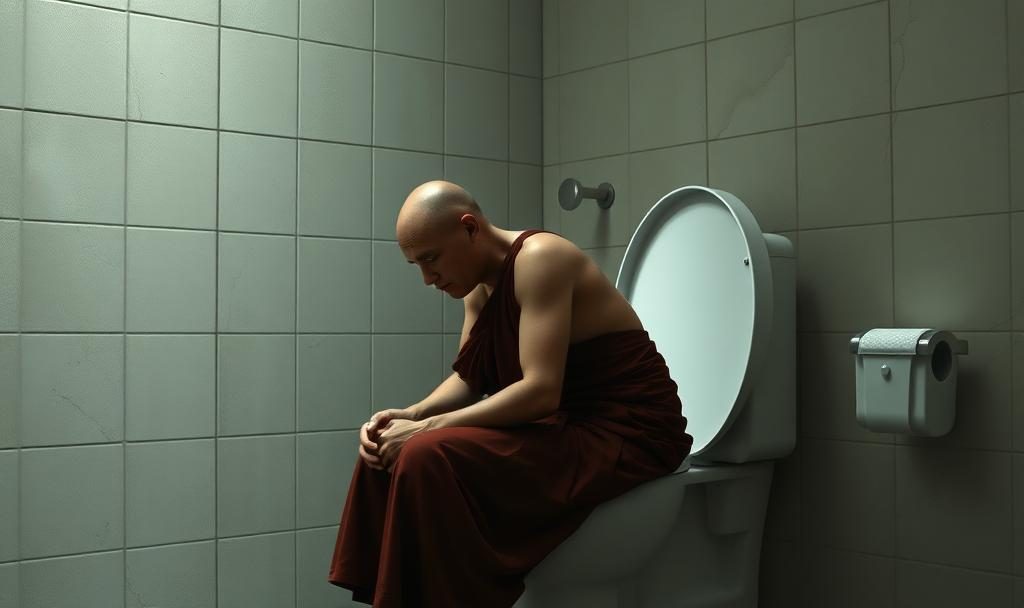
Does being king or queen make your brown loaf more beautiful, powerful, and better smelling than a peasant’s?
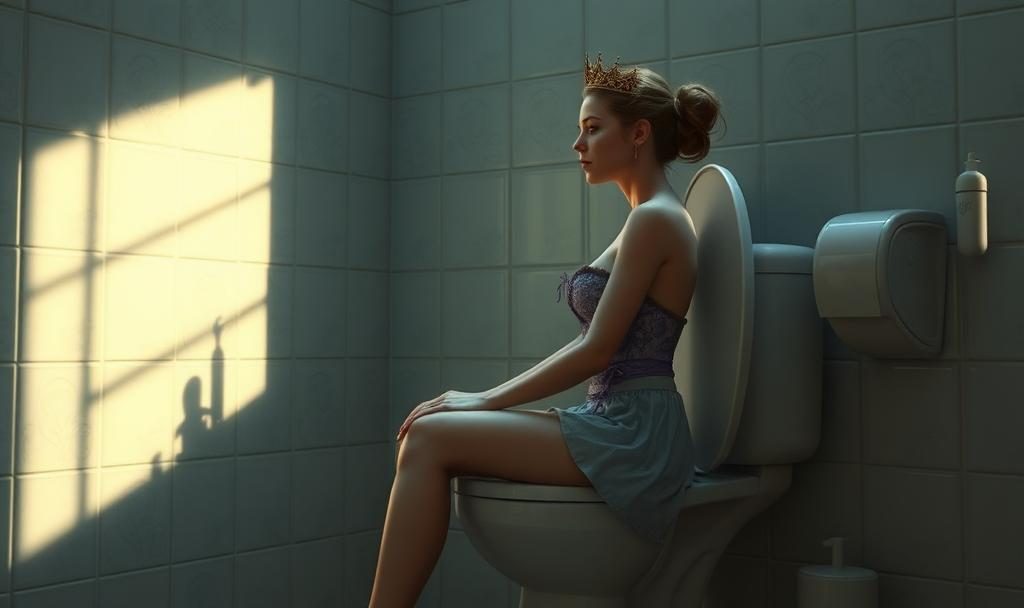
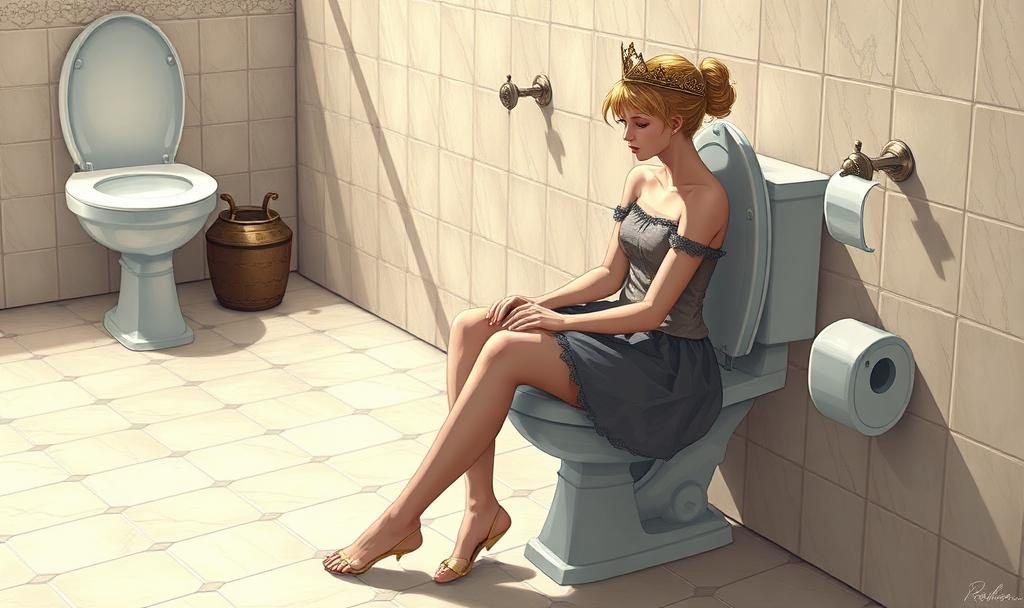

Is a supermodel’s loaf super beautiful and super aromatic?

Every time you go to the bathroom
Here’s a safe asubha anyone can do every day.
It only takes a few seconds to contemplate this.
Is that brown loaf you just dropped into the bowl beautiful?
Does it smell nice?
If you spend 2 hours a day grooming your hair,
perfuming your skin,
making yourself subha (attractive, beautiful),
are you still beautiful when that brown loaf is sitting in your intestines,
its visibility and wonderful aroma blocked only by a few thin layers of skin and mucous?
Or are you only beautiful now that you’ve liberated that brown loaf?
Is anyone here to witness your “real” beauty?
What about the food in your stomach that’s already in the process of baking a new brown loaf?
Are you ever pure and beautiful?
And not only for the brown loaf.
Every time you urinate, too.
Is that yellow stream beautiful?
Does it smell nice?
Every time you eat
When you eat, take a moment or more to regard the repulsiveness of food:
what it looks like in your stomach,
what it looks like in your intestines,
and what it looks like as it exits.
The asubha reflex
This is the asubha reflex:
to counter the subha nimitta (sign of beauty)
with an immediate reflexive action
of seeing the true asubha nimitta (sign of unattractiveness)
that underlies that fake veneer.
That’s the program.
Not a grim ordeal you endure, but a reflex you train until it runs on its own.
Early retirement from lust.
Enrollment is open.
Better yet, discuss this post on the forum — comments to the blog here often get spammed and ignored.